

A bottoming-out process means that major waves of selling are subsiding and the price is Arguments for a new bull run (breakout scenario): A new bull market requires a strong catalyst to drive sidelined liquidity back into the market. The following arguments support this optimistic scenario: US Federal Reserve pivot: The Fed has initiated a shift in monetary policy with an initial 0.5% rate cut. Falling interest rates increase liquidity in the global financial system and make risk assets like Bitcoin significantly more attractive to investors.
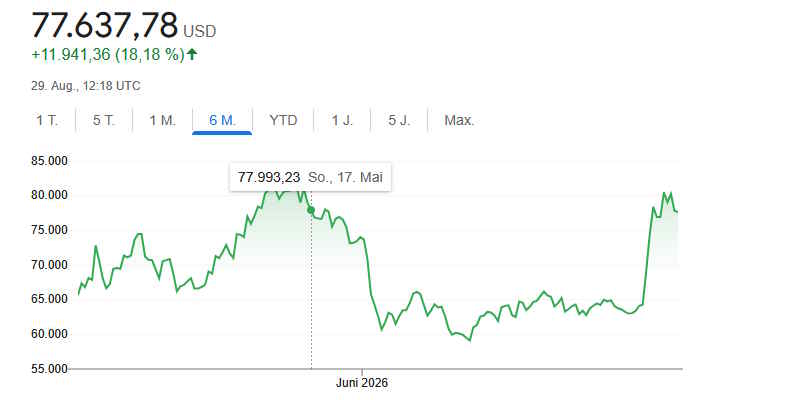
Historical cycle shift: Experts at Grayscale point out that the cyclical low could be reached earlier this year than in traditional four-year cycles (as early as late summer or autumn). If this level is successfully defended (e.g., a monthly close above $63,000), models will switch to “bullish.” Record network security: Bitcoin’s hash rate continues to hit new highs despite price corrections. A highly secure network reinforces the fundamental confidence of long-term investors. Supply scarcity vs. long-term forecasts: The circulating supply is approaching the 20.04 million BTC mark (out of a maximum of 21 million). Major players like MicroStrategy continue to hold massive reserves (>100,000 BTC). Long-term forecasts from institutions such as Standard Chartered ($120k–$200k) and BlackRock remain extremely positive.stablishing a stable floor. Several indicators show that this process is underway but still requires time:
- Absence of classic signals: According to analysts, historical comparisons with the bear markets of 2015, 2018, and 2022 indicate that the extreme capitulation phase—often a prerequisite for a definitive, classic “bottom”—is still missing. The market is tending to move sideways.
- Accumulation without momentum: While Bitcoin has seen steady accumulation for several weeks—particularly by large investors, or “whales”—the end of the sell-off has merely removed a market headwind. On its own, this does not yet generate sufficient organic demand to drive prices to explosive levels.
- Massive ETF outflows: Over the course of 2026, more than $3 billion flowed out of US spot ETFs. This indicates that institutional investors are currently acting cautiously and withdrawing capital, which is capping the price.
- Consolidation phase through autumn: Experts at XTB.com consider a prolonged sideways trend and a potential test of the $80,000 level likely, though they warn that pullbacks towards $50,000 cannot be ruled out in the event of renewed selling pressure.
Arguments for a new bull run (breakout scenario):
A new bull market requires a strong catalyst to drive sidelined liquidity back into the market. The following arguments support this optimistic scenario:
- US Federal Reserve pivot: The Fed has initiated a shift in monetary policy with an initial 0.5% rate cut. Falling interest rates increase liquidity in the global financial system and make risk assets like Bitcoin significantly more attractive to investors.
- Historical cycle shift: Experts at Grayscale point out that the cyclical low could be reached earlier this year than in traditional four-year cycles (as early as late summer or autumn). If this level is successfully defended (e.g., a monthly close above $63,000), models will switch to “bullish.”
- Record network security: Bitcoin’s hash rate continues to hit new highs despite price corrections. A highly secure network reinforces the fundamental confidence of long-term investors.
- Supply scarcity vs. long-term forecasts: The circulating supply is approaching the 20.04 million BTC mark (out of a maximum of 21 million). Major players like MicroStrategy continue to hold massive reserves (>100,000 BTC). Long-term forecasts from institutions such as Standard Chartered ($120k–$200k) and BlackRock remain extremely positive.
Disclaimer: Investments in cryptocurrencies are highly speculative and carry the risk of a total loss. This overview is for informational purposes only and does not constitute investment advice.

xaldris invest – xaldris.com – in friendly cooperation with






Leave a Reply