
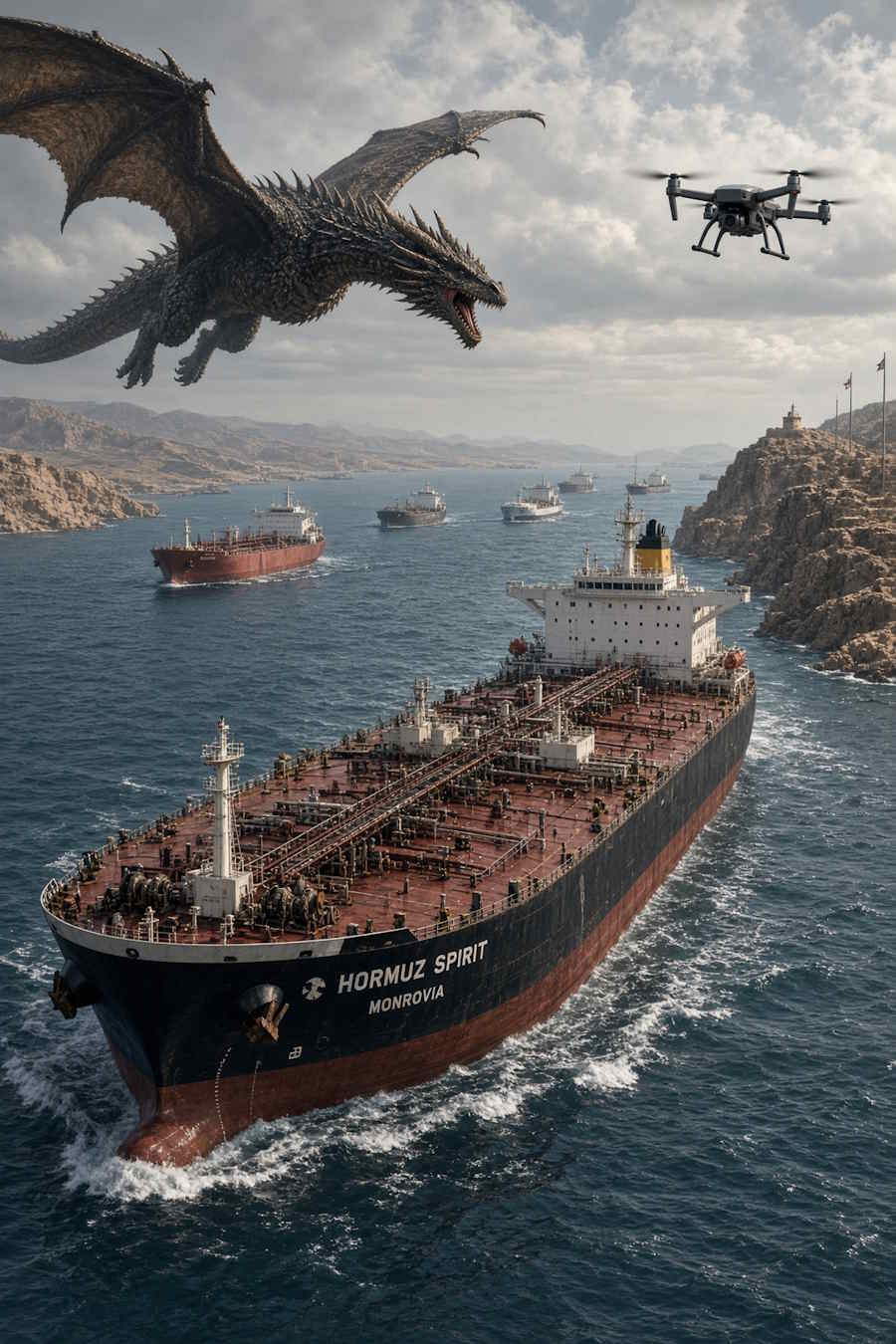
Brent crude has fallen by nearly 6 percent since the start of the week. The move followed reports that Oman and Iran plan to negotiate a new permanent transit arrangement through the Strait of Hormuz within 30 to 60 days. Those reports appear to have raised hopes among traders that the strategically vital waterway could reopen. Any such outcome is still likely to take time, however, because there is little sign yet that the United States is willing to make the concessions that would be required.
It is still unclear how many tankers are actually passing through the Strait of Hormuz. Latest figures from data provider Vortexa show that transit volumes have continued to rise, with roughly 10 million barrels a day moving through the strait most recently. Markets are likely to remain cautious until that recovery shows up in official Asian import statistics. Kpler data paint a different picture for the current month, pointing to only about 2.3 million barrels a day. China’s trade figures, due on 8 September, may offer a clearer reading of the present situation.
The war in Ukraine has also started to move the oil market more forcefully again. On Wednesday the crude price jumped by almost 4 percent at one point and gasoil by nearly 5 percent after news that President Putin sees an escalation in the conflict. A further intensification would probably keep Russian oil output from rising in the near term. According to the latest OPEC monthly report, production in July was already 940,000 barrels a day below the agreed level. Attention is shifting more toward refined products. The IEA said Russia’s daily oil exports in July were 630,000 barrels lower than in June; around two-thirds of that drop came from products such as gasoil and naphtha, which have been subject to an export ban since early July. The ban, originally due to expire on 1 September, now appears set to be extended until 1 October. Since the start of the year, Russian product exports have halved while crude exports have risen by 20 percent.





Leave a Reply